Dream God’s Dream

Isaiah 2:1-5

The word that Isaiah son of Amoz saw concerning Judah and Jerusalem. 2In days to come the mountain of the Lord’s house shall be established as the highest of the mountains, and shall be raised above the hills; all the nations shall stream to it. 3Many peoples shall come and say, “Come, let us go up to the mountain of the Lord, to the house of the God of Jacob; that he may teach us his ways and that we may walk in his paths.” For out of Zion shall go forth instruction, and the word of the Lord from Jerusalem. 4He shall judge between the nations, and shall arbitrate for many peoples; they shall beat their swords into plowshares, and their spears into pruning hooks; nation shall not lift up sword against nation, neither shall they learn war any more. 5

The Advent photo is a sixteen foot plow share. What makes this piece unique is that it was crafted from over three thousand hand guns collected by and surrendered to the police in Washington DC over a two year period.

It was unveiled on September 19th 1997, and for twelve years stood in the middle of Judiciary Square in Washington.  It is not currently on display.

It is the creative work of Esther Augsberger (a sculptor from Eastern Mennonite University) and her son Michael. It is a powerful and stunning witness to one family’s commitment to peace and a reminder that this is both the promise and the dream for our world. 

The base of the sculpture quotes Isaiah, “they shall beat their swords into plowshares and their spears into pruning hooks.”

In this first week of Advent the ancient words of the prophets bring both challenge and hope. They give voice to what we yearn for. They tell us peace is the promise; peace is the work; peace is the way.

The way is hidden in plain sight in the words of the prophet Isaiah.  We are so familiar with the swords into plowshares verses that what comes before can slide right by unnoticed.

As we look at the text it’s important to remember there is a linear order to things.  Peace is the outcome, the end result.  There are some important things that come before.

Peace is an uphill journey.  Verse two suggests a wonderfully subversive image:  God’s people, all nations will stream uphill. Stream is a verb that usually refers to water. And water flows downhill, because gravity is the law.  But God’s people will stream uphill against the flow. 

Peace is an uphill journey a counter cultural commitment to be the people of God when it would be easier to be just about anything else. 

In Isaiah’s time the mountains of nationalism and economic security were higher than the mountain of faith.  Isaiah pointed it out for them. He exposed their commitments and actions for what they were–idolatry pure and simple. The message is relevant for us today.

Now you know why prophets were not welcome in their own lands, truth be told they weren’t welcome any place else either.  Isaiah pointed his finger at his own kin and brought a word from God that named their errant commitments as well as the violence within them that kept them from peace.  He looked at his friends and family and said there is no peace, because you have not streamed up the mountain to learn the things that make for peace. 

The uphill journey often begins alone. The prophetic task is often the voice of one: one person who speaks truth to power; one person who journeys uphill again and again.  Isaiah was not sitting around waiting for peace to drop out of heaven. He was streaming up the mountain toward it. Whether or not anyone followed him was not the point. The journey was his to make; the truth burned within him and he was faithful to the task. 

We are so often caught in powerlessness, thinking that our little actions will not make a difference, and thinking or perhaps fearing either irrelevance or failure. What is ours to do we do not do.  Isaiah’s witness is to the power of one. 

Peace is an uphill journey that we choose to make, or not make, every day.  A deep commitment to peace means we live out individually what is needed collectively. It’s not about whether or not we change the world, that’s up to God. But this much we know, and Thich Nat Hahn said it best:  “there is not a way to peace, peace is the way.”

It begins with what we do or fail to do every day.  As people of faith we look first at our own lives and clean up what is ours to clean up.  We are impacted by the violence that is as much a part of our world as the air we breathe. We think that we are unaffected by it, and that is the first illusion that needs to go.

There is violence in our language. We think in terms of win or lose. We need to be right, sometimes at the expense of relationship. We pass self-superior judgments on others. We resist the spiritual work of reconciliation.  

Dreaming God’s dream for the world is a daily discipline that needs silence and solitude. Such disciplines occasion the kind of insights that lead us and strengthen us for the uphill journey.

It is a discipline that also unravels our fears. Most of what sets us at odds with one another is fear: the fear of being wrong, the fear of one who is different, or the fear of what others will think if we associate with “that person”. 

The uphill journey that will finally beat swords into plowshares and spears into pruning hooks is a journey of personal transformation that is supported and held accountable in the life of community. The uphill journey does not ask if one person can really make a difference. It stands as a witness that leaving things undone is a resignation to despair.

The most important work for peace is the work that begins inside us: routing the violence from our language and looking the people we see every day straight in the eye and seeing them as God’s beloved. It sets us on the lifelong uphill journey to the things that make for peace. 

Faith, such as we have and such as we hope for, calls us to look at these things; because peace in the world depends on peace in the country, which depends on peace in the community, which depends on peace in the home, which depends on peace in the heart. Just because things have been the way they are for so long doesn’t mean it’s the way they are supposed to be. 

The Irony of it All

Only in America can people gather on Thanksgiving Day around a table laden with food and give thanks for their blessings. The next day they trample people on their way to buy more stuff for people who already have too much.

Black Friday madness officially welcomes the beginning of unbridled consumerism. The National Retailers Association estimates that Americans will spend 942.6 billion dollars on holiday gifts, decorations and food. This shatters last year’s record of 889.3 billion. Despite inflation and concerns about the economy, people are planning to spend and spend big.

As a result, fifty percent of shoppers say they will take on short term debt, including predatory lending such as pay day loans. According to a Nerd Wallet survey, 31% of people have not paid off their holiday spending from last year. The average American household will spend $1455 dollars this season. So important is this brief burst of frenzied shopping that it is used as an economic indicator for the coming year. Supposedly, holiday shopping measures consumer confidence in the economy.  

There is a cost to all this holiday hoo-ha that goes far beyond the credit card bills that roll in during the month of January. For those who tend toward anxiety and depression, seven percent have considered suicide. Constant worry is a problem for fifty-three percent. Another thirty-one percent have difficulty sleeping. Significant percentages of people also stress-buy items they cannot afford, increase their alcohol consumption or experience mood swings. Even for those who do not tend toward anxiety and depression, holiday stress barges in the front door with pressure to buy and bake, entertain and indulge.

The ultimate irony of all this madness is that it is grounded in a tradition surrounding the birth of Jesus. He was a poor Middle Eastern Jew who was homeless and hated for his teachings about the proper use of riches and the need to care for the poor.

It is not known when Jesus was actually born and most of the stories around his birth are myths. That is not to denigrate the stories in any way, but there’s a good chance the stories aren’t factual, but they’re true.  The question to ask about these stories is not, “did it happen exactly this way?” Rather the question is, “what do these stories mean for us today?” What can we learn from being a follower of Jesus rather than one who simply worships the baby during the Christmas season?

Instead of a season of unbridled consumerism, here are some suggestions for alternative celebrations that cut down on the madness, the debt and the hoo-ha.

  • Have every family member choose one name. Buy gifts for that person that do not exceed a pre-determined amount of money.
  • Teach children that Christmas is not a time to get everything they want, but a time to be concerned about others.
  • Use some of the money you save not buying gifts for everyone and give it to a local charity like the food pantry or fuel bank.
  • Make a list of all the people for whom you normally buy gifts. Instead of buying them gifts, write a letter to each one telling them what a gift they are in your life.
  • Celebrate the season of Advent with an Advent wreath. Making a wreath is part of the fun and you can use whatever materials you like. The traditional wreath is made with greens. I make our wreath with sand and shells in a nod toward our love for the water.
  • Mark each week in Advent with the meaning of the candle you light: hope, peace, love and joy. Consider how these qualities manifest in your life.
  • Honor National Buy Nothing Day. Instead of joining the madness of Black Friday, stay home and buy nothing. Do a small counter-cultural thing that is closer to the spirit of the season. While you are not shopping, consider what charity or charities you want to support this season.

If you are one that laments that there is no Christ in Christmas, then engage in the activities that make Christ manifest in the world.

A Milestone

Yesterday the population of our planet reached eight billion people. A new report by the United Nations indicated there are a number of population trends to which we should be paying attention. The report states, “This is an occasion to celebrate our diversity, recognize our common humanity, and marvel at advancements in health that have extended lifespans and dramatically reduced maternal and child mortality rates. At the same time, it is a reminder of our shared responsibility to care for our planet and a moment to reflect on where we still fall short of our commitments to one another.”

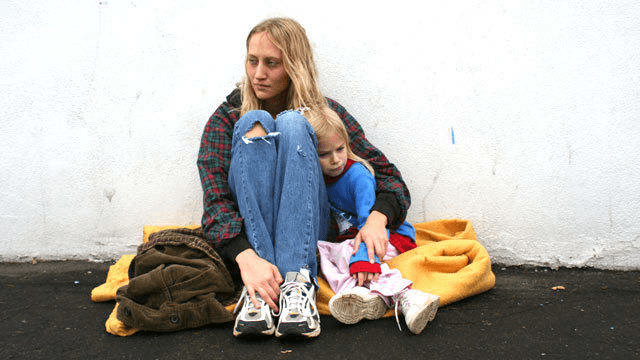
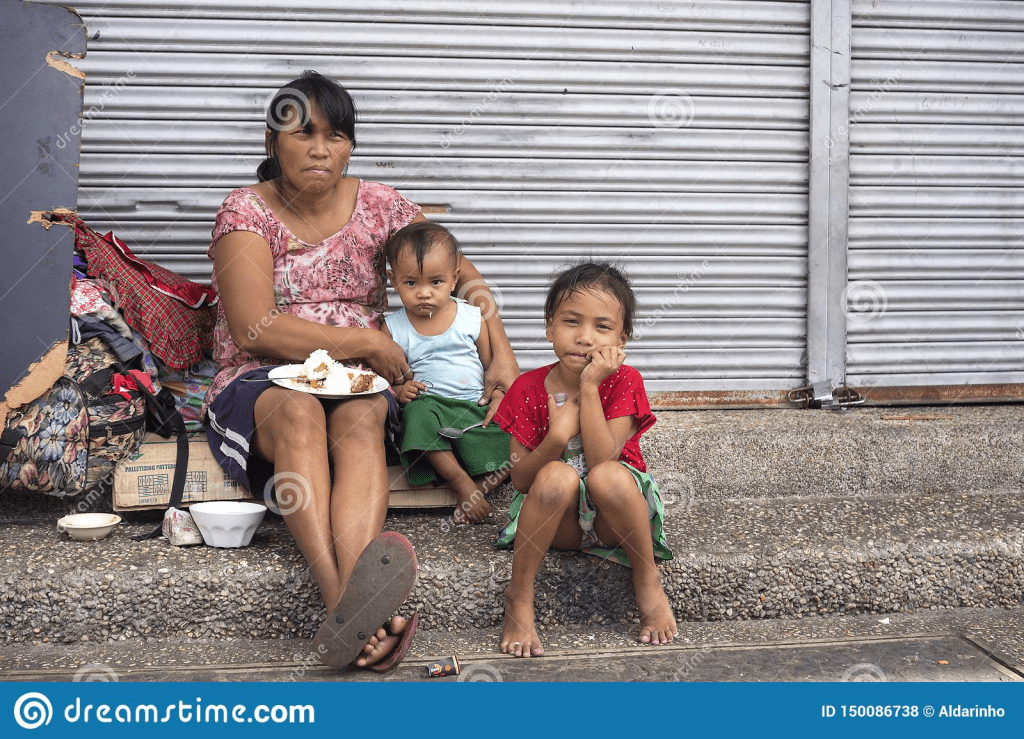
One area where we fall desperately short of our commitments to one another is in care for refugees. It is estimated that at the end of 2021 there were 89.3 million forcibly displaced persons as a result of persecution, conflict, violence or human rights violations. This includes 27.1 million refugees and 53.2 million internally displaced people (The United Nations Refugee Agency).

No one can forget (hopefully) the number of Central and South American people trapped in inhuman situations at the US and Mexican borders. Children in cages, people outside in scorching heat, and unaccompanied minors being deported alone to Mexican border towns. Under the reign of error from #45, immigration policies were set back decades. His administration fueled an anti-immigrant sentiment that continues. The current administration has tried to undo some of the policies, but has been blocked at every turn.  

In other areas of the world, Poland especially, but also other European Union (EU) countries have welcomed millions of asylum seekers and refugees. According to the European Commission in 2021, 23.7 million people in the EU were non-EU citizens (5.3% of the total population) and 37.5 million people were born outside of the EU (8.4% of all EU inhabitants).

The global refugee crisis is far from static. According to www.concernusa.org there are at least ten refugee crises on the horizon, including the Central African Republic, Somalia, Sudan and South Sudan, Myanmar, Ukraine and Syria.

As long as there is political, economic and sectarian violence there will be refugees. It raises questions about where they will go, how they will be cared for and how countries can absorb such large numbers of individuals when they struggle internally with their own economies. Some countries are starting to remove the welcome mat. According to the New York Times, a small vocal group of Poles is ramping up resistance to taking more Ukrainian refugees. The United States has less than a stellar track record of welcoming refugees. Other countries are finding their resources stretched to the limit.

It’s time we look at planet earth as a global community. The artificial lines we draw around countries are the result of war, violence and power moves. If we erase the lines (an unlikely outcome), then we see our responsibilities to one another in a different way. It’s time for foreign aid to stop having quid pro quo undertones. It’s time for our strategic concerns to take a back seat to human need. Yes, we are dealing with world bullies like Russia and the threats are real. It’s a complicated problem to be sure, but we cannot absolve ourselves of responsibility for the millions of people who suffer through no fault of their own.

The truth of the matter is that there is enough for everyone’s need, but not everyone’s greed. Much of the anti-immigrant sentiments around the world have to do with not wanting to give up a certain lifestyle, not wanting to lose what is “ours” and being unwilling to share. Our prejudices and biases against “foreigners” have a long and unattractive history in the United States. The current incarnation against Central and South American immigrants should come as no surprise.

So maybe the place to start is with those prejudices and biases. Maybe we begin by opening our hearts to those who are displaced by famine, war and violence and trust that if we open our hearts the actions will follow. Maybe it’s time to support refugee agencies as part of our charitable giving. Those of us who claim the name of Christian cannot deny that Jesus was ultimately concerned about the poor, the outcast and the downtrodden. As long as power is related to privilege and skin color determines social standing and the “right” religion defines our response, the refugees of the world will continue to struggle against the cold heartedness of the rest of the world.